Grooming happens when a person in a position of power tries to declare a reality that isn’t true but that the subservient victim has no power to correct. The constructed reality is always about keeping the victim powerless and the groomer safe.
When people speak about something being off, or the ick factor, or something creepy, it is usually because of something like this . A reality that feels icky but it is hard to speak about.
That is why it is so important to say that Jeremy Rockcliff and the Liberal party did not win this election. We look at his primary vote and see that he is liked. Groomers usually are well liked too. They have grown power and popularity over years and that power and status makes the people being groomed doubt themselves.
Obviously I am not accusing Jeremy of anything illegal, but this is a teaching moment for Tasmanians.
Tasmania is undergoing a cultural shift around sexual predators. Grace Tame found a way to speak about it publicly and without nicety. People who were children at the school where she was abused say that everyone knew and because Grace spoke out, they and others like them are finding their voice.
But it was Katherine Morgan Wicks who changed the culture. We already trusted her straight, unflappable disclosure of covid facts through the pandemic and then she told us at a press conference as if it were a covid update, about James Griffin offending over years as a nurse at the Launceston General Hospital. And she was so authentic and on behalf of the infrastructure that let those children down we felt her take responsibility and commit to make it right. Let’s call that the anti ick factor. That moment where the child’s reality becomes THE reality. It feels so good becuse it is true.
And slowly but surely conversations have unfolded where perpertrators take their rightful place in the poo and victims are realeased from the ick. Paul Reynolds killed himself before his victims got that chance but the independent inquiry commissioned when Donna Adams bravely said, “Leave no stone unturned’ has begun the path to restore dignity. If you felt like the AFL team was tangled in the political debate this might be why. Reynolds groomed and abused children as part of the power reality he created as a police officer heavily involved in football and basketball in the state. I found the report in a link from the sussex university article on Tasmania’s elite cartel, where it said that Tasmania’s elite cartel corruption remains socially demoralising and costly. https://blogs.sussex.ac.uk/centre-for-the-study-of-corruption/2025/05/07/elite-cartel-corruption-in-tasmania-the-nature-of-the-game/
Costly to the Tasmanian people of course, not to the people in power.
At the start of last year Katherine Morgan Wicks was made Secretary to the Premier, so head of the public service.
We now have a woman with integrity and a real ability to be straight with ick as head of the Tasmanian public service, Tasmania’s largest employer.
Cultural change is happening in Tasmania and will continue as we all call out lies and deception at all levels.
Do you remember when your story began? Not all dogs come when thay are called. Recall is like that.
I know I was there. I studied embryology in my medical degree. The ectoderm, the mesoderm, the endoderm. But was I me before the ectoderm?
We can learn so much about the brain and still not know a single thought that comes from it. My thoughts nowadays most commonly come as language yet at the start there were no words.
It was dark. Yet even in the dark with eyes closed there are patterns. When I watch the patterns now I can feel that I was there. There were also sounds. As I listen to the muffled sounds in the early morning dark I can feel that I was there. Remembering is like that. Not a dog that doesn’t come but a cat that appears on your lap. It appears suddenly but it is warm and cosy and sound asleep and you know it has been there for some time.
I saw my own babies sucking thumbs on 18 week ultrasounds. I don’t remember doing that but all babies suckle. Did I suckle and lose myself until all I was was a suckle? What happened to the world when all I was was a suckle? In those moments now the world appears to disappear and all there is is me. But back then that was my world.
Is that what genesis or the Tao speak of when distinctions arise? Are those stories really just us?
Is that what happens when we write it down? The earliest stories had no words. They were paintings on caves 40,000 years ago. We recognise them and can tell a story from them but all stories change in the retelling, even ours.
I learned about the heart in my medical degree. I didn’t discover anything about how a heart loves.
I learned the muscle, chambers, blood supply, nodes and nerve stimulation. I learned to see electricity on an ECG. It was during a cardiothoracic rotation at Royal North Shore Hospital that my heart broke. Nothing prepared me for that. Was it my heart?
I can see why they might say that. A crushing pain in the chest that takes your breath away.
And yet my heart sings. It soars. It melts. It stops.
I fell in love completely when I became a mum. I discovered that love multiplies.
I love with all my heart. I hold people in my heart.
I eat a hearty meal. I have known heartless people.
I learned to steel my heart to negations thrown under the guise of love. You can’t say love you have to do love.
My heart heals. I ate the universe after all. It was a strawberry in Rob’s dream. I love that man. I love how he experiences so completely. He was the first man to really get me. Or at least I felt got by him, loved by him. He didn’t say it he did it. The synergy of loving feeds my soul.
One of the most delicious things I do is watch my mother share treasures from her grandchildren with my children.
These treasures are simply remembered moments that took her breath away or made her heart swell or simply brought a smile that marked a place in time.
And she wrote them down, in her beautiful hand, practiced with pothooks, softly up and strongly down when she was in their place in time long ago.
She pulls out the writing and reads aloud “I love a good gumtree” as said by a small boy of 4 on the walk to school hand in hand with the biographer.
‘I don’t like boys, they are ugly and hungry” declared his littlest sister when she held the kindergarten place card.
3 years before that her older sister marked this place with an ineffable ability to know where all things were. “Where is the sunscreen?” would have it magically appear clasped in finespun 5y.o fingers.
In these moments children who are disparate in age appear altogether in the same place and we experience them as if they were triplets.
My good and great grandmothers held this space for us though it was never diarised and the memories fade. Evoked unexpectedly by a smell, or a teacup or the taste of date and walnut loaf, the script has long since evaporated.
We act as if a child is born into a pre-existing world, but for the child they are the world. The centre of their own universe.
They live only in the present. They do not yet have the language to construct a past or a future.
They trust naively for they have not yet been betrayed.
They love naively for they have not yet been hurt.
They are born lovable for their survival depends on it.
They are who they are and they will become what they will if we simply allow it.
We know too well the negations we ourselves endured. We her them in the judgements we have about ourselves picked up along the way, inflicted by the slings and arrows of outrageous fortune or more painfully by those most trusted under the guise of love, meant to correct our doing but when poorly aimed wound our soul. A negation of our being.
No one wants that for their children.
We also have parts of ourselves that flourished, either in the sanctity of solitude or celebrated by those who loved us. In those parts we feel most at home.
We want more of that for our children
We flourish when we are loved. To love someone is simply to allow them be who they are. But who are they? Who are they really? What is their core? What matters to them in their marrow? What is their code, their ethos? When they are authentically themselves who is the author?
Perhaps we can never really know. We can only see the external manifestations like reading a book or a poem we glimpse something of the author but not the whole.
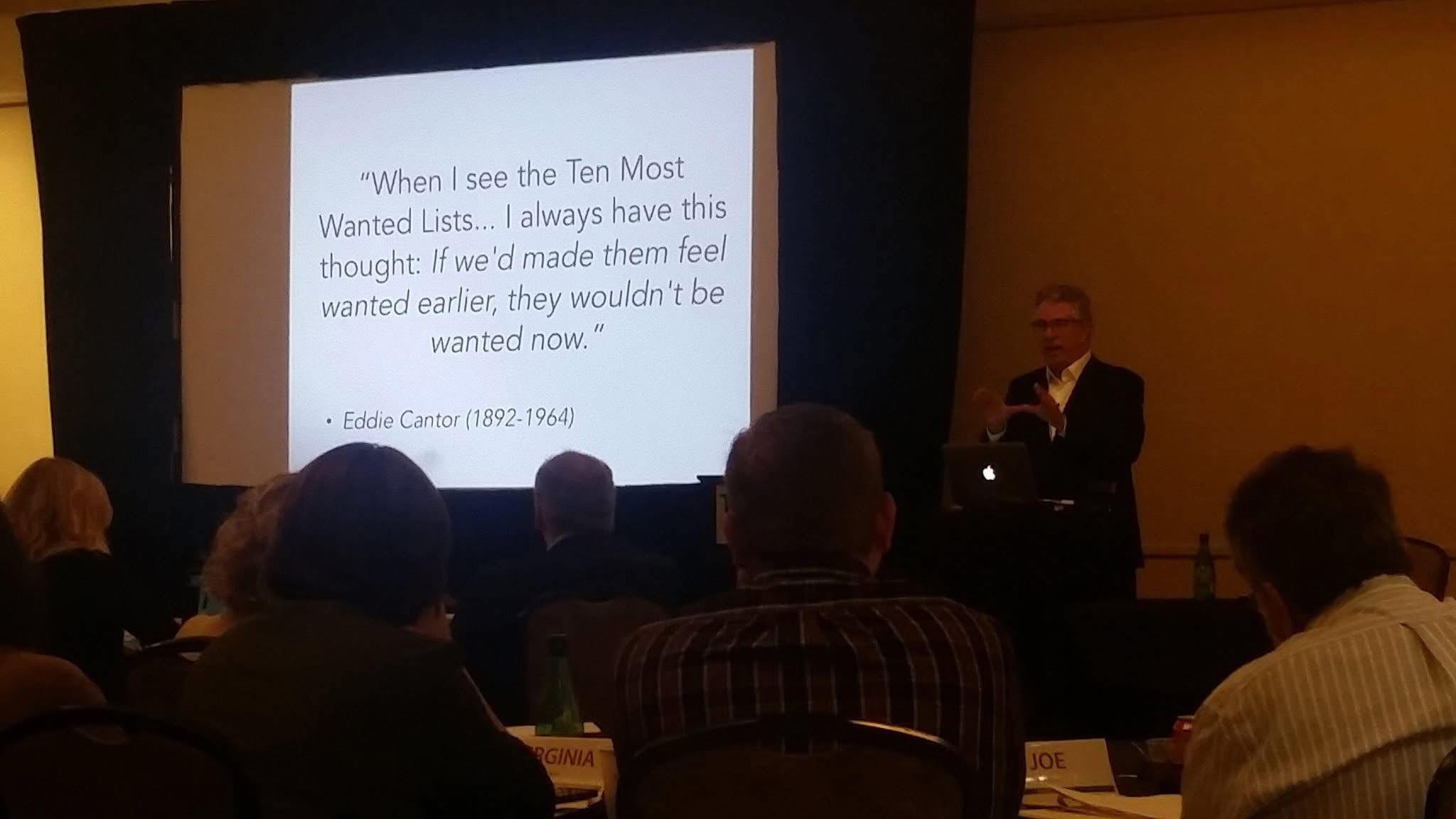
Bruce Perry showed this slide at a presentation years ago and it has always stayed with me.
Bruce is one of those lovely people who found themselves questioning the aspects of medical training that had us be less human with our patients. Caring and connecting stayed really important to him and drove his career interest in healing trauma in hard areas like little kids where trauma gets in the way of neurodevelopment.
15 years ago or thereabouts schools here were looking at his work, there were trauma informed schools and for a bit we had a commissioner for children who looked like he might make good things happen….
But then he got ousted, and good initiatives in schools were removed, there was less understanding and more judgement. Kids were made to be responsible for their trauma responses and punishment and disconnection became the go.
A whole generation of people that cared and were doing good work got shafted. Recent conversations I’ve had in response to the worrying escalation in anger and reactivity in these disinfranchised young people who are now big enough to cause damage reveal that it is not just the kids that are hurting its the adults who weren’t allowed to help them. It is not suddenly new, I was speaking to a young lad who had done well 5 years ago and asked who the person was he attributed his turn around to and it was a teacher in grade 8. I was interested in finding out more about the adults who kids say help and so I asked if I could contact him. He agreed. The teacher was touched and remembered him fondly but there had been a new principal and he was no longer able to work in that way and the tone in his voice was so hurt, so jaded.
Resillience research showed that just one person can make all the difference in a child’s life. Just one person who takes an interest and believes in a kid. As an adult being curious about what a child cares about. What matters to them, what makes them tick can really help the child to make space for that to expand into a meaningful life, rather than contract into a painful kernel that needs defending at all costs.
The world has learned a lot about ending pandemics by working on a common protocol. Many people worked together. Many countries worked together. Even the countries that didn’t want to collaborate took the lessons learned and implemented at least some of them.
What would be the same level lessons that could be implemented by anyone to stop the spread of war?
If we thought like this then Hamas would be seen as infected by war, and on October the 7th they infected Israel. That happened because there wasn’t an effective suppression strategy before October 7th and there were no scientists studying the phenomenon to elucidate early warnings and what to do. There were no lessons learned from other countries who were succeeding with an eradication of war strategy. You know, the countries where there are no mass shootings and where the crime rate is low.
Organisations like WHO aim to be apolitical. They do not judge. They just have expertise about prevention, testing, treatment, containment and vaccination and offer this help at no cost to countries that need it most. Ideas for doing the same with conflict were created after world wars but they were more judicial and less about health and wellbeing.
So what parts of the strategy could be translated to suppress war?
Catch it early. It took a masterful act of diplomacy for the WHO to coordinate with China. It took just 13 days for China to publicly share the genetic sequence of Covid. It took just 21 days for WHO experts to get to Wuhan to investigate. PCR tests were developed rapidly and distributed around the world by WHO. Imagine if such support had been there for the innocent people of Palestine and Israel to keep them safe from the outbreak of war? Support from a non judgmental body interested in health and wellbeing.
2. Isolate so it doesn’t spread. What would this idea inform when protests and retaliatory violence happens around the world. What would be different if we saw these people as infected by war and needing to be helped back to health in a caring and non judgmental way? Vulnerable groups would be cared about, given incentive payments, seen as important in the goal of eradication.
3. Prevention measures to avoid spread. Sanitiser and masks were concrete symbols of prevention. Every day in every household a reminder about how not to get infected. Very quickly media and social media would be promoting messages of how to keep safe. Symbols like Covid safe apps, uber eats door drops, crosses in floors and plastic screens became the norm and every moment was a reminder to not get infected.
What if we started with concern for the people infected by war. What if we heard their stories and who they were to their families, like we did about those on ventilators or worse with Covid. We turned them into people, not cases and tried to understand even in the face of fear.
3. Vaccinate. We vaccinated everyone but particularly the at risk groups. A massive effort was made to protect people. We took healthy populations and gave them a tiny dose so they could handle it and find a way to not succumb. There is always conflict in our everyday lives. At home, at work, with family, siblings, schoolmates. Learning a strategy to return from war to peace in micro dosing ways until it becomes embodied.
4. Herd immunity. The eradication of weapons of mass destruction from the planet. The removal of guns from everyday life. Teaching children about peace at 2 months, 4 months, 6 months 12 months, and continuing the vaccination program throughout childhood.
What is your response to reading this? What other ideas would be helpful?
Humberto Maturana, Francisca Varella and Heinz Von Foerster are all dead now. And I really thought their whimsical inquiry around human cognition may have died with them. And then I read this paper
It starts by saying ’Cognitive science is itself a cognitive activity. Yet, computational cognitive science tools are seldom used to study (limits of) cognitive scientists’ thinking.” ……I stopped reading here to check the authors and publication date, but it is recent and it wasn’t Heinz!!!! Feeling a little excited I read on….. ” Here, we do so using computational-level modeling and complexity analysis. We present an idealized formal model of a core inference problem faced by cognitive scientists: Given observations of a system’s behaviors, infer cognitive processes that could plausibly produce the behavior. We consider variants of this problem at different levels of explanation and prove that at each level, the inference problem is intractable, or even uncomputable. We discuss the implications for cognitive science.”
I haven’t read anything so wonderful since Heinz died in 2002. Granted I may have been looking in the wrong places and I thank the pandemic for revealing the nonsense in those places.
One of the really helpful things that Heinz spoke about was the difference between a trivial and a non trivial machine. “The trivial machine is all the rage among the followers of the notion of causality” he said in his conversations with Bernhard Poerksen.
The precondition for speaking about a cause and effect relationship, is that the rule of transformation is known. You have to know what makes the cause become the effect. In a simple machine there is an unconditional and unchangeable relationship between the input and output.
In medicine we have tried to turn snippets of the vast complexity of the non-trivial machine that is the human body into trivial sub unit machines. We have diagnoses that can be thought of as trivial machines and they are actually handled by doctors as if they are trivial machines. For example, diabetes can be diagnosed by a fasting blood glucose level. Above a certain reading it is diagnosed definitively, below a certain reading it can be excluded definitively and in between there’s another whole new world to turn glucose intolerance and insulin resistance into a trivial machine. The more unchangeable we make the relationship between treatment and effect the better the medicine.
It is such a satisfying field to work in if you like certainty and tidiness.
And so boring if you like uncertainty and messiness.
The medicalisation of human suffering has tried to follow the same path and as Heinz might say, it really is a horror show.
This lovely paper unpacks the horror and fictionally removes it and then, just as Heinz was prone to do, although possibly borrowed from Gregory Bateson’s metalogues, the authors use a fictional dialogue to explain what they mean. I’ll paste the metalogue herefor those who want the short version of the good bits of this lovely paper…….
“Unpacking the full implications of our results for cognitive science research practice is not easy, and we imagine that those reading this may have all kinds of questions, objections, or counter-intuitions. Given space limitations, we cannot possibly address them all. Instead, we unpack the implications of the results using a fictive dialogue, addressing the most likely concerns along the way. In the dialogue, Dr. Conjectura (denoted by C) plays the role of the skeptic who does not see the relevance of the results for their own practices. R relays our responses. C: I appreciate you trying to help me achieve my research goals, but I can’t see how you are doing so. How are the theorems relevant to me? I am never in that ideal situation. R: What ideal situation? C: You formalized my inferential problems by assuming I have perfect, errorless observations. But my data are always incomplete and noisy. R: The theorems show that in the ideal situation finding explanations consistent with the facts is not tractable. How can more uncertainty about the relevant facts make this problem easier? It seems it can only make it harder. C: Fair. But you set an unrealistic standard for explanation. No explanation is perfect, but at best an approximation. R: What do you mean exactly by ‘approximation’? C: Well, for instance, explanations do not always need to be consistent with all the data. R: We need not assume such a high standard. Even if an explanation needs to be consistent with, say, half of the data,5 generating such ‘half-consistent’ explanations remains intractable. C: Oh. That’s counter-intuitive. R: I hope this takes away your worries about the idealizations we introduced? In general, many problems that are intractable to solve exactly are also hard to solve approximately, for various meanings of ‘approximation.’6 C: But I still do not understand. If you would just give me perfect, error-free observations, shouldn’t it be easy for me to infer the mechanism producing that data? R: Explanation does not come for free. The number of possible mechanisms you could describe with language and mathematics is astronomical. Finding a description that pinpoints a mechanism consistent with the data is like finding a needle in a haystack: there exists no general efficient procedure for searching the space. C: But I’ve already narrowed down the options. I’m looking only for explanations of a particular cognitive architecture type: [insert your favorite framework, e.g., ACT-R, Adaptive Toolbox, PDP, Subsumption-Architecture, etc.]. R: Our analyses encompass this view, as one option, by constraining the space of possible functions (the set F ) and algorithms (A), according to your architectural commit- ments. Even with such general a priori commitments, the space remains astronomically large for architectures with non-trivial computing power. C: What do you mean by non-trivial?
R: Well, even if a system has few possible internal states and its behavior is fully governed by simple rules, generating explanations of its behaviors remains intractable.7 you think that human cognition is simpler than this?
C: No, likely more complex. R: Then our intractability results apply to your work. C: Are you saying my work is hopeless? I cannot hope to ever generate a satisfactory explanation for cognition? R: I wouldn’t say hopeless. If you were to hit upon a satisfactory explanation through sheer luck, then you could recognize this.8 C: Sigh. That’s not much of a plan … R: I don’t think you need to be any more discouraged by intractability than by the inherent uncertainty in your data, generalizations, and theory that you were already dealing with. But it does mean that your inferential work cannot be proceduralized in any efficient way. So best not try to make an algorithm, or an otherwise too-strict set of rules, to replace your scientific thinking. C: Why not? What could go wrong? R: You may fool yourself into thinking you are searching the whole space, while you are actually stuck in a small corner of an astronomical space outside your considera- tion. It may also cause you to assume that the system you are studying is simpler than you really believe, because otherwise your procedures would not converge efficiently. C: Well if any procedure I might use will hold me back, what can I do? R: I would endorse a meta-approach of not proceduraliz- ing. This is especially important now, as we increasingly focus on a too narrow set of methodological approaches in cognitive science.9 The best advice I can give pertains to the community: our only hope of understanding the mind is if the community allows for pluralism10 in approaches and an unbounded number of procedures different researchers may adopt. C: Why unbounded? R: Because it is known that intractable problems cannot be solved by a fixed number of parallel procedures.11 C: But if we impose no limit on the number of approaches, wouldn’t there be many bad ones?
R: Recognizing the need for and legitimacy of alternative approaches is a prerequisite to productive critique.12 So you can critique approaches on substantive grounds, but I must dissuade you from viewing any fixed (set of) proce- dure(s) as the right one and trying to convince others that they should adopt it too. I’ve noticed you grumbling about the too-subjective methods13 some of your colleagues are using, and I must encourage you to live and let live.14
……..And so, I humbly strive to live and let live……..
Public health is all about managing the health of a population. The driving forces are really not intended to manage an individual’s health.
Individual health management is tailored to the individual but almost never translatable to managing a healthy population.
If you think about the last time you went to the doctor and were prescribed a treatment, you understand that it would be very strange to say ”that treatment was good for me so the whole population should have it”.
Well orchestrated lockdowns during the early stages of the Covid pandemic successfully reduced the the death toll in Australia. We had a negative “excess death rate” for 2020 and 2021. That is a fantastic public health outcome. However the wellbeing of some individuals was actually negatively impacted by lockdowns. It was a great decision for the population and turned out to be a really bad thing for some individuals.
Getting your head around how public health and individual health priorities are different and often collide turned out to be very hard for people during the pandemic and fuelled most of the social unrest that we saw.
With Public Health initiatives it is expected that a small percentage of individuals will opt out or will be unsuitable due to their individual health requirements, but Public Health initiatives do not need 100% compliance to work.
I suspect that there are many systems that this collision of priorities creates unrest.
As many of you know I co-founded a Neonatal Kitten Rescue Hobart. We rescue tiny kittens who are unable to feed themselves. These vulnerable waifs and their stories have amassed a big following and a small army of supporters. The not for profit is financially sound and the work which is all done by volunteers is highly regarded.
But, the cat is classed as an invasive species in Tasmania. Despite 200 years of integration into the Tasmanian eco system it is still demonised by many, and mass cullings are randomly undertaken despite poor evidence that such actions will achieve anything.
Rescue is an individual welfare issue and the Tasmanian ecosystem is a population issue and the forces commonly collide. There are also lots of factional groups competing on the interest of one species over another. I have recently discovered that the Sugar Glider, while native to Australia is introduced into Tasmania and is decimating the swift parrot population be eating nestlings and their mothers as they sit on eggs. Culling cats increases sugar gliders and decreases swift parrot females, which are usually monogamous but are now having extra marital affairs due to the excess of males. It is complicated.
The muddied water that is mental health policy is a similar area where competing forces have had bad consequences. We have seen interventions driven by population data impact terribly on individual mental health time and time again. The cashless debit card is the most recent train wreck here in Australia.
The right intervention for an individual many times takes them out of the workforce which is bad for the population. Theres a book called “Sedated: How modern capitalism created our mental health crisis” which looks at this issue of tying work productivity to DSM categories. What can seem like an innocent distinction for the clinician to make is painted in a new light as a noxious force in the capitalist machine.
Clinicians see daily how interventions that work with individuals are just not translatable to the masses. The idea that they might translate fuelled 60 years of stagnation in the field of psychotherapy. Many therapists with skills in marketing and good intentions ran with their personal discovery from working with a few clients, a new technique that they thought would work for the masses. Lots of TED talks were had, keynotes and conference tours with no improvement in outcomes in population mental health and possibly even more alienation of the poorer socio-economic cohorts who suffer the most.
The clinicians that I admire rose a little on that wave and didn’t like what they saw, choosing to return to the basics of foundational teaching and focusing on doing good work in the full awareness that there is something seriously missing in the field but until we find it we can focus on doing good work with individuals and working on being available to the more disenfranchised cohorts.
There is something very humbling about working in a time that we will look back on as a profession with embarrassment. We know we will look back with shame on things like human rights violations of psychiatric inpatients, on medicating children without knowing what the drugs we use actually do on many systems. On receptors that we know exist outside the brain but we have little understanding of what they do there. And yet doctors still prescribe.
SSRI product information contains a warning that the drug increases suicide risk in under 25’s. It has had this warning for my whole career and prescriptions continue to be written and under 25’s on SSRI’s continue to suicide. And yet doctors continue to prescribe.
Neuroscience, the golden child of the ’90’s has also not delivered. We could say it’s in it’s infancy, but after 30 years of intense study and no improvement in outcomes for people, it is more likely that its basic fundaments are flawed. The observations are very gross. For me its like saying ohhh you went to the gym and did arm curls and now you have big biceps. The big biceps must have made you go to the gym and do arm curls. You must have had a genetic predisposition in your biceps that predispose you to go to the gym. I read any neuroscientific observation through that lens to help keep things real. There are way too many dodgy semantic links between two observations being made.
So why the meandering on this sunny winters morning in Tasmania, 42 degrees South, when I haven’t written a blog for so long? There isn’t enough written on how badly we are doing with mental health. Theres not enough gentle questioning of the foundations we take for granted that must actually be flawed for such monumental inaction to have been the norm. Gandhi said a long time ago that you can’t change anything without a newspaper, I am a fan of conversations for possible conversations. we don’t know what we don’t know.
For me, I think management of suffering has been too much in isolation for the last century. Healing always used to happen in community. In large group rituals. Making it a one on one thing in a clinician’s consult room was such an odd thing to do.
It has been a long time since Ive written a blog. These blogs were originally an enthusiastic exploration in an attempt to improve my work and teaching in management of mental health in General Practice. It turned into largely disillusionment about the mainstream direction of mental health care.
So often there’s a family in crisis and lots of government departments involved wanting employment, training, school attendance as outcomes… but the family doesn’t have stable accommodation. They dont have an income to pay their bills, they have an ever present threat of retribution for non compliance, and commonly other threats in the form of court orders and family violence. How does one think about completing a school assignment with all that going on? Children experience a world of disconnect and that the system doesn’t care. How does a stretched, stressed, usually single parent provide for the needs of such children when to do so risks their only source of income.
So much money is spent by this system, but never where it is needed. Ive seen these families do well when stimulus packages and cash payments relieve their stress. I saw it in the GFC and through the covid lockdown. Something must be wrong when relieving financial stress and bringing some equality through an external impact on the wealthy, makes such a difference to the people who are really suffering.
And we never look at these things that work and say to ourselves “maybe we should do more of that”
In our work with clients I think it’s the same. Something makes a difference and instead of doing more of that with this client, and being attuned to the things with each individual client, we turn our single success into a new theory and ram it down ther throats of all our clients. Just look at who is on the current lecture circuit doing just that. That’s what the system does too and it causes damage.
So I have a few proclamations from my 30 years as a doctor and from my General Practice which has specialised in mental health.
A good mental health practitioner is good with a diverse population of clients and is invested in the clients that they seem to make worse. They build strong relationships and most importantly they care. They admit their mistakes and they can apologise if their ideas caused hurt. They dont claim to have the answer. They never blame their client. They dont give up on people. They aren’t wedded to theories and they discredit unhelpful theories that clients have picked up from the broken infrastructure that have caused suffering and disempowerment.
I believe that we will look back in 100 years at our theories on mental ill health and be embarrassed. Like so many generations before us we will see that our constructs and explanations damaged people.
I value scientific exploration. But true science explores the phenomenon to be explained and if the explanation doesnt fit it is thrown out. We dont bend people to our explanataions, we must change our explanations…or better still, don’t have any explanations…at least for the next 100 years!
“I don’t believe just ‘cos ideas are tenacious it means they are worthy” Tim Minchin



 drgabriellepeacock.com